Northwestern Pritzker School of Law is home to an incredible group of faculty members working at the intersections of law and many other disciplines. Their research and scholarship has helped advance the understanding of law and legal institutions in a diverse array of fields. Learn more in our “Recent Faculty Works” series about the latest publications and innovations of our faculty.
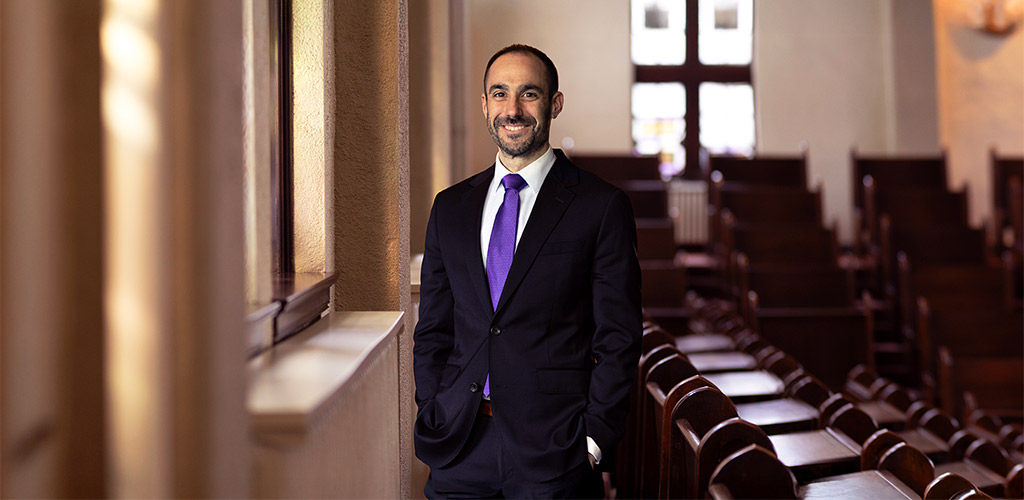
By Neha Jain, Professor of Law, Deputy Director of the Northwestern Buffet Institute for Global Affairs
Recent years have seen millions of people displaced by major environmental and political upheavals around the world. Yet anti-immigrant sentiments have driven electoral results in the United States and Europe, resulting in hardline shifts in policy. Legal scholars confronting anti-immigrant backlash have advanced sophisticated market models as the next-best solution to the global crisis in refugee protection, on the thought that states in the Global South might be induced to take refugees, for a price, with humanitarian benefits. This Article advocates leveraging existing tools in domestic and international law to resist the normalization of market thinking in international refugee policy. … Read More
The Supreme Court has increasingly embraced legal doctrines that empower elected officials to hide politically inconvenient information and ideas from the American people. Two lines of precedent illuminate this phenomenon and its reach across seemingly disparate areas of the case law. The first is a development in First Amendment law known as government speech doctrine and the closely related rule that public employees receive no First Amendment protection for their work product speech—that is, for anything that they write or say while doing their jobs. The second line of precedent is the aspect of separation of powers law known as unitary executive theory (“UE theory,” “UE,” or “unity”). Given the growing importance of UE theory and government speech doctrine in both legal and political realms, it is more important now than ever to understand how they undermine, rather than protect, meaningful, substantive accountability. Viewing these two schools of thought together also helps us to see how doctrines across seemingly disparate areas of the law can interact with and buttress one another and be harnessed by partisan interests. … Read More
Keywords: constitutional law, First Amendment, free speech, politics
By Alex Lee, Howard Friedman ’64 JD Professor of Law; Director, Center on Law, Business, and Economics (Co-authored with Daniel M. Klerman)
Priest and Klein’s Selection of Disputes for Litigation has been one of the most influential legal articles of all time. This Essay reviews its contribution to legal scholarship. Priest and Klein’s central and enduring contribution is the recognition that some cases are more likely to settle than others. It follows that litigated disputes are not a random sample of all disputes. This basic insight is true under nearly all litigation models and is also confirmed by a large body of empirical evidence. Priest and Klein’s article is also famous for its prediction that, under certain conditions, the plaintiff trial win rate will approach fifty percent. That prediction, however, is not supported by most other litigation models and has received only modest support from the empirical literature. Our citation analysis also suggests that The Selection of Disputes for Litigation is one of the rare articles whose importance was both recognized almost immediately and whose influence has continued to grow over several decades. … Read More
Keywords: Priest-Klein hypothesis, selection of disputes, litigation and settlement, divergent expectations, fifty-percent hypothesis
Access to contraception has become newly critical since the Supreme Court decided Dobbs v. Jackson Women’s Health Organization. By eliminating a federal constitutional right to abortion, the Court raised the already urgent stakes for those seeking to control their reproductive lives, and for sexually active women in particular. But the Supreme Court is not the most immediate threat to birth control. This Essay argues that attacks on contraception do not depend on a direct judicial repudiation of Griswold. Rather, an era of contraceptive siege is already upon us. Access is diminishing through three incremental and mutually reinforcing dynamics: the spillover effects of Dobbs that shrink service capacity and enable the conflation of abortion and birth control; the ascendance of parental- and conscience-based claims that authorize new gatekeeping; and a misinformation-driven cultural turn against hormonal methods that lays the groundwork for restrictive regulation in the guise of protection. Taken together, these developments jeopardize the availability of contraception even as constitutional doctrine remains, at least for the moment, formally intact. … Read More
Keywords: Supreme Court, birth control, Dobbs v. Jackson, constitutional law
He has served the school as interim dean for the past six months Daniel Hale Williams Professor of Law Zachary D. Clopton has been appointed dean of Northwestern Pritzker School of Law, ...
Emily Kadens, Edna B. and Ednyfed H. Williams Memorial Professor of Law, has been awarded a prestigious Visiting Fellowship for the 2026-2027 academic year at the University of Oxford’s All Souls ...
Robert (Bob) Burns, William W. Gurley Memorial Professor of Law Emeritus at Northwestern University Pritzker School of Law, has been awarded the American Bar Association’s (ABA) Tort, Trial, and ...