Northwestern Pritzker Law’s international LLM program offers graduates of foreign law schools the opportunity to expand their knowledge of American law and legal processes, continue their studies in international law, and engage in comparative legal research. Graduates of the program represent more than 50 countries and hold prominent positions around the world. They include attorneys, professors, judges, corporate counsel, consultants, human rights workers, bankers, and civil servants.
The Life After the LLM series showcases these alumni, highlighting their background, their experience at Northwestern Pritzker Law and in Chicago, and their career path following graduation.
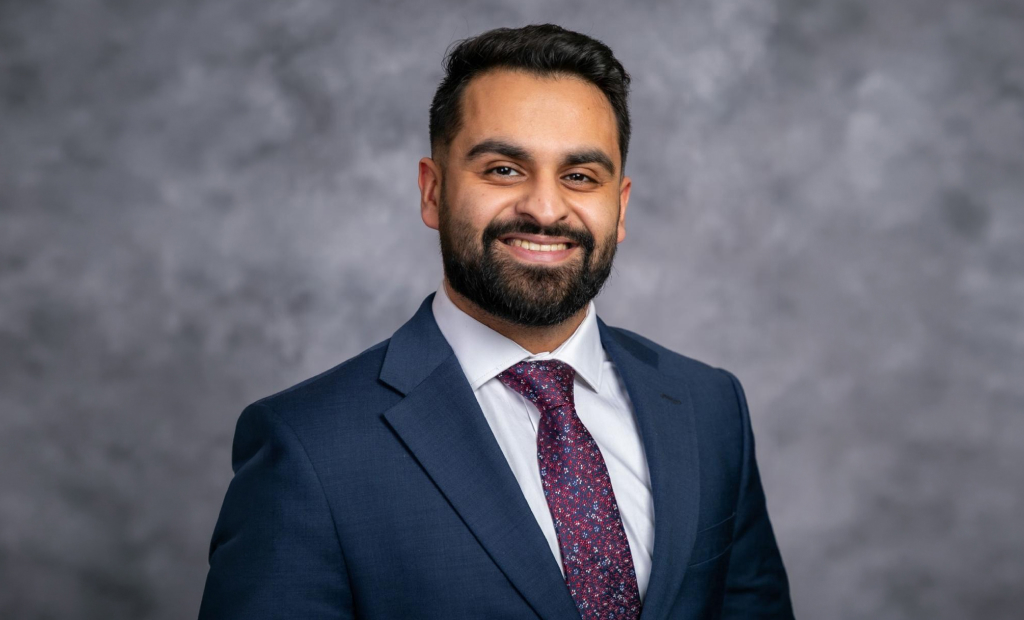
In this installment, we spoke with Naif Alshalan (LLM ’25), originally from Riyadh, Saudi Arabia. After graduation, Naif worked as a visiting attorney at Gibson Dunn in New York before returning home to practice in the firm’s Riyadh office.
Why did you decide to pursue an LLM in the United States?
I wanted to broaden my perspective as a lawyer beyond the legal system in which I had been practicing.
By that point, I had already gained experience practicing law in Saudi Arabia, particularly in areas involving regulatory and public policy work. I felt that studying in the U.S. would give me the opportunity to step outside of the system I was familiar with and develop a more international perspective.
For me, the LLM was not about changing where I practiced law. It was about adding another dimension to my legal education and bringing that knowledge and perspective back to my career in Saudi Arabia.
Why did you choose Northwestern?
Northwestern stood out to me because of its strong international community and its location in Chicago. As a Saudi lawyer, I wanted to understand how legal systems and practice operate in a broader international context. I knew that being surrounded by students and lawyers from other jurisdictions would challenge the way I think about legal issues.
I was also drawn to the combination of academic rigor and practical exposure. I wanted to return to Saudi Arabia with a deeper understanding of U.S. and international law, a broader network, and a new way of approaching legal problems.
Looking back, the international environment at Northwestern was one of the most valuable parts of my experience. I built relationships with people from different parts of the world that have continued to shape how I think about my career and the kind of lawyer I want to become.
What was it like coming to the U.S. to study law?
Both exciting and challenging. The way law was taught and approached in the U.S. was very different from what I was used to.
One of the biggest adjustments was learning to look at legal issues from a different perspective. I was used to working within the Saudi legal system, and at Northwestern I was constantly exposed to U.S. law and to classmates trained in completely different legal systems. That pushed me to question some of my assumptions and become more comfortable looking at a problem from multiple perspectives.
What was the best part of your Northwestern experience?
The LLM program gave me the opportunity to attend talks and events with practitioners and academics and immerse myself in the U.S. legal environment. I tried to make the most of the year rather than treating it simply as a degree I needed to complete.
I also enjoyed the freedom to explore different areas of law and think about where I wanted my career to go next. Coming out of the program, I felt that I had a much clearer idea of the kind of international legal career I wanted to build.
What did you like most about the Law School community?
How welcoming and close-knit it felt. One thing that really stood out to me was how easy it was to connect with people, even though we came from very different backgrounds. As an international student, I never felt like I was on the outside of the community. There was a genuine sense that everyone was willing to help each other, whether that was sharing advice about classes, navigating life in a new city, or simply spending time together outside of school.
I also really appreciated the friendships I made with people who I probably would never have met otherwise. We came from different countries, different legal systems, and different professional backgrounds, but we found a lot of common ground.
What was the best part of being in Chicago?
The balance the city offered. It is a major city with a lot going on, but it felt very comfortable and manageable as a place to live. I loved exploring its different neighborhoods, trying new restaurants, spending time around the lake, and simply discovering the city outside of law school.
What I think I appreciated most, though, was having a city that gave me a life outside the classroom. Some of my favorite memories from the LLM year are the simple ones: exploring the city with friends, finding new places, and experiencing Chicago as a resident rather than just as a visitor.
What type of law are you currently pursuing?
I’m currently practicing primarily in public policy, regulatory, and administrative law. A significant part of my work involves advising on regulatory frameworks and public-sector matters, which is an area I’ve developed a strong interest in throughout my career.
At the same time, I’ve been increasingly involved in international arbitration matters. I enjoy the combination of complex legal issues, cross-border work, and the strategic element involved in arbitration.
What was your professional path after graduating from the LLM program?
After graduating from Northwestern, I wanted to put the experience I had gained in the U.S. into practice, so I moved to New York and joined Gibson, Dunn & Crutcher as a visiting attorney.
That was an important part of my professional development because it gave me the opportunity to work in a major international law firm and gain firsthand experience working on matters in the U.S. legal market. It also allowed me to build on the international perspective I had developed during my LLM.
After that experience in New York, I returned to Riyadh and continued my career with Gibson Dunn’s Riyadh office.
What did your LLM degree enable you to do professionally?
My LLM degree gave me two things I continue to use in my practice today. First, it strengthened my critical thinking skills. Class discussion was central to the experience. We were encouraged to analyze different arguments, challenge each other’s views, and look at legal issues from different angles. That taught me not to simply look for an answer, but to think more critically about how I reached that answer.
Second, it gave me a strong foundation in the common law system. This has been particularly useful because my work often involves benchmarking other jurisdictions. That training makes it much easier to understand how legal concepts and regulatory approaches work in common law systems.
Did your LLM degree advance your career goals?
Absolutely. I wanted to develop as a lawyer with an international outlook while continuing to build my practice in Saudi Arabia, and the LLM was an important step toward that. It positioned me for the cross-border work I wanted to pursue, from my time in New York to the international arbitration matters I’m increasingly involved in today in Riyadh.
Today, being back in Riyadh and working on public policy, regulatory, administrative, and international matters, I can see how the experience fits into the direction my career has taken.
Northwestern Pritzker School of Law is pleased to announce the appointment of three new Law Board members and three new members of the Board’s Executive Committee. The Law Board is dedicated to ...
From students arguing cases before federal and state courts to faculty scholarship shaping opinions in the U.S. Supreme Court, from alumni arguing on behalf of the United States to judges ...
As the world prepares to watch the FIFA World Cup 2026 Final on Sunday, July 19, one Northwestern Pritzker Law alumna plays a unique role within the world’s most watched sporting event. As ...