Northwestern Pritzker Law’s international LLM program offers graduates of foreign law schools the opportunity to expand their knowledge of American law and legal processes, continue their studies in international law, and engage in comparative legal research. Graduates of the program represent more than 50 countries and hold prominent positions around the world. They include attorneys, professors, judges, corporate counsel, consultants, human rights workers, bankers, and civil servants.
The Life After the LLM series showcases these alumni, highlighting their background, their experience at Northwestern Pritzker Law and in Chicago, and their career path following graduation.
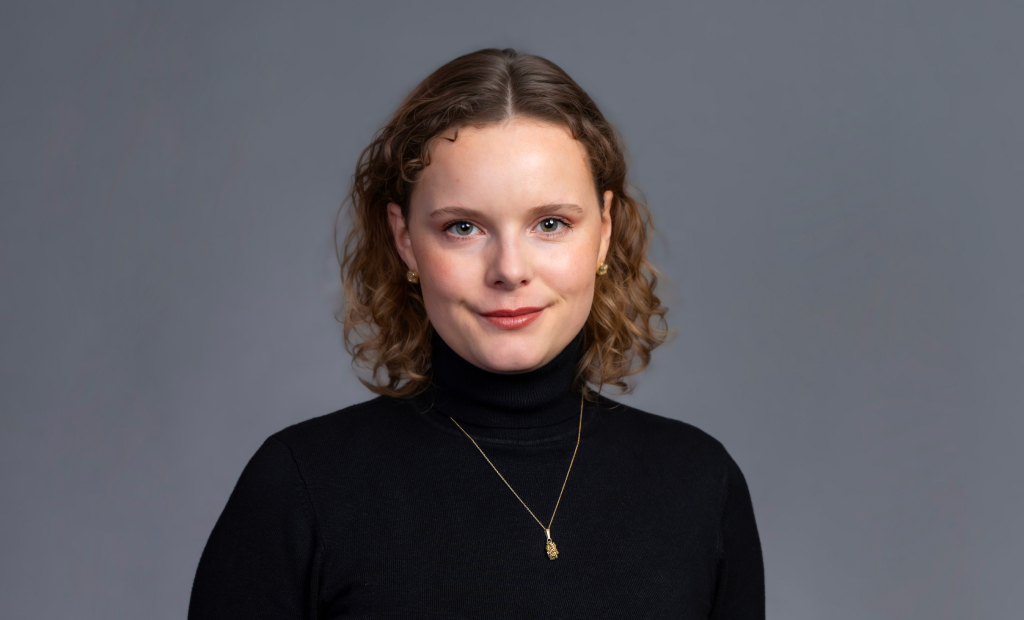
In this installment, we spoke with Katharina Hengst (LLM ’26), originally from Germany. Prior to coming to Northwestern Pritzker Law, Katharina worked as a finance lawyer in her home country.
Why did you decide to pursue an LLM in the United States?
As a finance lawyer, the U.S. felt like the home of capitalism and free markets, the source of so many of the financial tools used around the world today. I wanted to study at that source. The people I learned from had an original, distinct approach to markets that reflected a mentality genuinely different from what I’d grown up with in Germany. That was exactly what I wanted from my time abroad: not just somewhere “next door,” but a place that would give me a real shift in perspective.
Why did you choose Northwestern?
I was drawn to Northwestern because so many of the professors were practitioners rather than pure academics; they brought real stories from practice into the classroom, which made the material feel immediate and relevant. The program also had a strong business orientation, including a great collaboration with Kellogg School of Management, which fit exactly with what I was looking for. And of course, being based right in downtown Chicago made the whole experience even more appealing.
What was it like coming to the U.S. to study law?
It was eye-opening, especially coming from a civil law jurisdiction. Seeing how the common law system works and how law is actually created, with much more left to arbitration than at home as well as a fundamentally different approach to rights and legal reasoning, was at times genuinely surprising, but also inspirational. What I loved most, though, was the teaching style itself: very personal, with a lot of interaction, presentations, and debate. It was a different way of learning than the more academic, reading-heavy approach I was used to in European legal education, and it suited me. It made studying feel less like a solitary exercise and more like an ongoing conversation.
What was the best part of your Northwestern experience?
What made the LLM special was the freedom to shape it myself. You could really choose your own path through the program, and I used that to specialize in exactly the subjects I cared about. My class schedule ended up looking quite different from others in the program because of that. I got to spend my time on what genuinely interested me, which felt like a real privilege.
What resources at Northwestern Pritzker Law did you find most useful when you were a student?
The most valuable resource for me was the support staff and their service-oriented mindset. As a student, and especially as an international student new to a city, small questions come up almost every week: a scheduling issue, a technical problem, where to find a book, how to handle something you’ve never dealt with before. At Northwestern, there was always someone to ask. If I was on campus, I could simply drop by Student Services and get an answer right away, and the same was true for the IT office and for the professors. Every time, the response was immediate, personal and unbureaucratic, together with practical advice on how to proceed.
What did you like most about the Law School community?
The international students were wholesome and genuinely supportive of one another. Class sizes were small enough that you could always talk directly with professors, who were incredibly approachable, creating a personal, intimate setting. Within the LLM specifically, I never felt any sense of competition; it was much more about mutual support.
What was the best part of being in Chicago?
Chicago’s downtown centrality is really unique. You have the Riverwalk and the lakefront right there, curated in a way you just don’t find in other big cities. Beyond that, Chicago has an incredible nightlife and a young, sporty, vibrant energy to it. It felt like getting the full city experience in a way I hadn’t had anywhere else I’d lived.
What type of law are you currently pursuing?
I will be joining a boutique law firm in Munich as an Associate in its Financial Restructuring and Capital Markets team.
What was your professional path after graduating the LLM program?
I spent the summer preparing for and sitting the New York bar exam. While awaiting my results, I secured a position as an Associate.
What did your LLM degree enable you to do professionally?
My LLM gave me the comparative perspective that cross-border transactional work demands. Counterparties, investors and applicable regulations frequently sit outside Germany in restructuring and capital markets matters. Understanding U.S. legal concepts and market practice allows me to bridge those systems rather than treat them as foreign territory.
The 2026-2027 academic year marks an important milestone for Northwestern Pritzker Law’s Tax Program, as it officially celebrated its 25th anniversary with a series of events recognizing a ...
Six recent Northwestern Pritzker School of Law graduates (all JD ’26) received post-graduate fellowships this year to support their work addressing issues such as environmental justice, education ...
Northwestern Pritzker Law’s international LLM program offers graduates of foreign law schools the opportunity to expand their knowledge of American law and legal processes, continue their studies ...