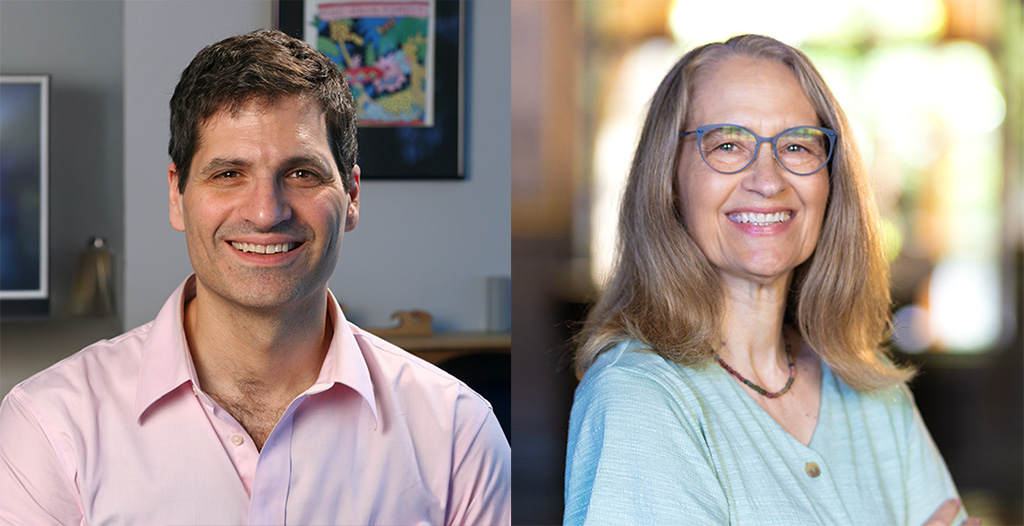
When Professor Myriam Gilles first began studying mandatory arbitration more than two decades ago, few people outside a small circle of legal scholars paid much attention. Today, she has become one of the country’s leading voices on an issue that quietly affects millions of Americans every year.
For Gilles, a nationally recognized scholar of civil procedure and complex litigation, the focus is not simply about arbitration clauses buried in contracts. It’s about whether ordinary people retain meaningful access to the courts when something goes wrong.
“A clause most Americans have never read but have almost certainly signed,” she said. “This is my life’s work.”
Gilles wrote her first article on the subject in 2005, predicting that companies would increasingly use arbitration clauses to insulate themselves from class action liability. Twenty years later, that reads less like an improbable prediction and more like an accurate forecast of the world we now live in.
The premise is deceptively simple. Every time someone ships a package, downloads a piece of software, opens a bank account, or clicks “I agree” on a set of terms and conditions, they are very likely giving something up without realizing it: the right to sue.
Consumers and employees routinely agree to lengthy contracts that include mandatory arbitration provisions that generally require disputes to be resolved through private arbitration rather than public courts and frequently prohibit them from joining together in class actions.
“The truth is, today there are almost no arbitration-free options,” Gilles said. “I’m a lawyer who studies this, and I click ‘yes’ all the time.”
That reality has shaped Gilles’ scholarship for much of her career.
From the Classroom to American Express
Gilles didn’t set out to become an arbitration scholar. She describes herself as one of the rare law professors who did not love law school and who came into academia determined to teach differently than she had been taught.
“Many of my own professors were brilliant academics, but they weren’t especially engaged with the real world,” she said. “I wanted my classroom to be different.” In her Civil Procedure course (and in a seminar on forced arbitration she will teach next spring) Gilles brings in practicing lawyers to discuss real cases. “I’m a scholar, but I’m also an advocate. I don’t believe in sitting above the issues as a detached observer.”
Gilles joined Northwestern Pritzker School of Law in 2025 as the Catharine Waugh McCulloch Professor of Law, after more than twenty-five years at Cardozo School of Law. One of the nation’s most-cited civil-procedure scholars and a recipient of multiple teaching awards, she now teaches Civil Procedure, Torts and other courts at Northwestern and is developing a seminar devoted to forced arbitration and the American civil justice system.
“Professor Gilles has fundamentally shaped the national conversation about forced arbitration. Her scholarship exemplifies the kind of rigorous, influential research that defines Northwestern Pritzker Law. Her work advances legal understanding and informs the courts and policymakers,” said Zachary D. Clopton, Dean and Daniel Hale Williams Professor of Law.
Her focus on arbitration began, unexpectedly, at home. Her husband, a plaintiffs’ class-action lawyer, was working on an early antitrust case against American Express on behalf of small merchants who alleged the company was abusing its market power through excessive fees.
“He came home one day and said, ‘Buried in the merchant agreement is a clause saying they can’t go to court’,” Gilles recalled. “My reaction was immediate: That’s crazy! Because if companies could do that, everyone would do it.”
Years later, the Supreme Court decided American Express Co. v. Italian Colors Restaurant, ruling that the arbitration clause was enforceable even though pursuing an individual claim would have cost any single merchant more than a million dollars over a dispute worth a fraction of that.
“The merchants may very well have had valid antitrust claims,” Gilles said, “but the Court essentially said the law doesn’t guarantee you an economically feasible way to prove them.” She added, simply: “Once I saw where this was heading, I couldn’t walk away from it.”
The stakes, she said, show up in places easy to overlook like nursing home residents who unknowingly sign arbitration agreements at admission, later barring their families from wrongful death claims, or allegations of sexual misconduct at businesses like massage chains, which have similarly struggled to reach open court. “If we believe workplace sexual assault shouldn’t be forced into arbitration,” she said, “shouldn’t we care just as much when it happens elsewhere?”
A Supreme Court Turning Point
Mandatory arbitration’s rapid spread, Gilles said, traces largely to a string of Supreme Court decisions beginning around 2011. The most consequential is AT&T Mobility v. Concepcion, in which the Court upheld a mandatory arbitration clause buried in a cellphone contract.
The case blocked customers who claimed AT&T had engaged in deceptive practices from banding together in a class action. Their only recourse was individual arbitration over a dispute worth about $30.22.
“Do you know a lawyer who’s going to work for a third of $30?” Gilles asked. “It’s claim-suppressive.” Arbitration providers often insist claimants do not need legal representation, she said, but that is misleading.
Since Concepcion, the Supreme Court has decided more than two dozen additional arbitration cases, largely reinforcing the idea that companies can opt out of liability simply by inserting the right language into a contract. Many low-dollar claims simply disappear as a result.
Gilles has testified before Congress seven times on the issue. “This is really about class action liability,” she said. “Companies are trying to insulate themselves from class action lawsuits.”
The Cost of Secrecy
Gilles argues that arbitration strips away something less visible but just as important: the public record.
“Lawsuits serve an important information-forcing function,” she said. “We know about bad things happening inside companies because of lawsuits. If we lose those lawsuits, especially during a period of significant deregulation, like the one we’re living through, we’re simply not going to know what misconduct is happening around us.”
That secrecy has practical consequences for ordinary people weighing a job offer or a purchase, she said, since arbitration keeps workplace complaints and consumer disputes out of public view.
In 2021, Gilles testified twice before Congress: first at a hearing with former Fox News anchor Gretchen Carlson on broad forced-arbitration reforms, and later alongside several women who had been sexually harassed or assaulted at work and were only able to speak publicly because Congress had subpoenaed them. Their testimony, Gilles recalled, offered “a real glimmer of hope” that legislators would start taking forced arbitration seriously.
“Each of them had been forced into arbitration because of what happened to them, and each of them described the process as deeply retraumatizing,” Gilles said. “Companies are repeat players in arbitration: they help select the arbitral forum, pay substantial portions of its fees, and may return to it again and again. An individual claimant generally appears only once. That structural imbalance matters.” Also, “arbitrators are disproportionately male. How are they likely to respond when a woman comes forward with allegations of sexual assault?”
Part of the problem, she said, is structural. Arbitration offers little of the machinery available in a courtroom. “You don’t have the same procedural tools you would have in court.” Gilles said. In arbitration, “a claimant may have much more limited access to company documents, witness testimony, and evidence about whether others experienced the same conduct.”
That testimony helped drive passage of the Ending Forced Arbitration of Sexual Assault and Sexual Harassment Act, legislation Gilles helped draft. President Biden signed the bill into law in 2022. It allows employees alleging sexual harassment or assault to reject predispute arbitration agreements and pursue their claims in court. Despite legal challenges, it remains in effect.
“For those of us who have spent years advocating for reform, it represents a genuine source of optimism,” Gilles said. Still, she sees it as an incomplete fix. “Many of us believe that if sexual harassment and sexual assault don’t belong in arbitration, then neither do other forms of workplace discrimination. Racial discrimination shouldn’t be forced into arbitration. Age discrimination shouldn’t be forced into arbitration. Really, none of these claims should.”
A broader measure she has long supported, the Forced Arbitration Injustice Repeal Act or FAIR Act, would render predispute arbitration agreements unenforceable in employment, consumer, antitrust, and civil-rights disputes altogether. The distinction that matters to her is consent after the fact. “If, after a dispute arises, two parties voluntarily decide arbitration is the best way to resolve it, that’s perfectly appropriate,” she said.
Shareholders, Not Consumers
Gilles is clear about who benefits from the current system. “In this area alone, the Supreme Court has essentially handed companies a ‘get out of jail free’ card,” she said. “All they have to do is include certain language in their contracts, and many lawsuits simply never happen.”
And the savings do not trickle down. “The financial savings don’t flow to consumers. They flow to shareholders. Consumers don’t get lower prices. They don’t receive better service. Instead, we live in a world with more opportunities for fraud, more illegal fees, and more unlawful conduct, while having fewer tools to uncover it.
Occasionally, a case breaks through the public’s general indifference to arbitration. That happened recently, after a woman died from an allergic reaction at Disney World, and Disney initially sought to compel arbitration based on agreements her family had agreed to years earlier first when signing up for a Disney+ subscription and later when they purchased the theme park tickets. “People were stunned,” Gilles said. “They had signed up for a streaming service at home, yet Disney argued that agreement prevented the family from pursuing a wrongful death lawsuit over something that happened in one of its parks.” Public backlash was fierce enough that Disney backed down.
Most cases never get that kind of attention. “Arbitration isn’t naturally a headline-grabbing topic,” Gilles said. “It takes time to explain, and you need a compelling human story.” Making matters harder for reporters and the public alike, arbitration proceedings are typically confidential, and participants are often required to sign nondisclosure agreements afterward. “People are effectively silenced,” she said. When disputes move into confidential arbitration, that information often disappears from public view.
Litigation as Deterrent
At the heart of Gilles’ scholarship is a broader belief about the role civil litigation plays in American society. Litigation, she argues, is not valuable because it encourages lawsuits. Its greatest value lies in encouraging compliance before lawsuits become necessary.
“My North Star has always been that litigation works best as a deterrent,” Gilles said. “It encourages companies to stay on the right side of the law.” When organizations know they can be held accountable in court, she believes they have stronger incentives to identify problems early, improve practices, and comply with the law.
“It’s almost always better for a company to fix a problem before someone else forces them to fix it,” she said. Arbitration also keeps sympathetic plaintiffs away from juries, whose sympathies companies have learned to fear.
For a legal scholar who has spent two decades chronicling what she calls a quiet reshaping of American civil litigation, that stakes-driven urgency has not faded. If anything, the wins of recent years—a narrow federal law, a handful of favorable rulings on transportation workers, a moment of public outrage over Disney—have only sharpened her sense that the fight is far from over.
The animal rights movement brings moral clarity and emotional resonance to the debate over how and to what extent animals deserve legal protection in a variety of contexts, from the conditions of ...
Northwestern Pritzker School of Law is home to an incredible group of faculty members working at the intersections of law and many other disciplines. Their research and scholarship has helped ...
In her new book, Sex and Sports: Transgender Rights and the Culture War Over Girls’ Sports, Kimberly A. Yuracko, the Judd and Mary Morris Leighton Professor of Law at Northwestern Pritzker ...