


Bluhm Legal Clinic Newsletter
As we reflect on the work of our clinicians, students, staff, and community partners, we are reminded that clinical legal education is not only an academic endeavor—it is an ongoing commitment to ...
Dear Friends and Colleagues,
As we share this latest edition of our Clinical Program newsletter, I am reminded once again of the extraordinary role that clinical legal education plays—not only in shaping the next generation of lawyers, but in strengthening the institutions and communities that depend upon thoughtful, courageous, client-centered advocacy.
Clinical legal education brings the study of law to life. It asks students to move beyond doctrine and into relationships: with clients navigating profound uncertainty, with communities seeking accountability, and with systems that demand critical examination. Clinic students are learning not only how to practice law, but how to exercise judgment, build trust, collaborate across disciplines, and lead with empathy – skills that AI cannot replace. They are interviewing clients, appearing in court, drafting complex agreements and briefs, conducting investigations, counseling entrepreneurs, and confronting some of the most urgent legal and social challenges of our time. In every setting, they are discovering that the law is ultimately about people—their dignity, their opportunities, and their futures.
The stories featured in this issue reflect the impressive breadth of their work. In the Center on Wrongful Convictions, students and faculty continue the urgent work of investigating claims of innocence and confronting the very real consequences of wrongful conviction. Through the Environmental Advocacy Center, our students partner with communities working to protect public health and advance environmental justice in the face of rapidly evolving challenges. In the Donald Pritzker Entrepreneurship Law Center, students help innovators, nonprofits, and small businesses build ventures that strengthen local economies and expand opportunity. And in the Tenant Advocacy Center, students handle everything from client intake and information verification to representing clients in housing court, as well as working on briefs and discovery motions.
Although these clinics approach very different problems, they share a common purpose: preparing students to use the law thoughtfully, creatively, and responsibly in service of others. That purpose feels especially important at this moment in our nation’s history. Across every area of practice, we are reminded that access to justice, the rule of law, and public trust in legal institutions depend upon lawyers who are prepared not only to think carefully, but to act responsibly.
Our clinical students meet that challenge every day. They do so with intelligence, humility, and an inspiring sense of purpose. We are so proud of them. And we are deeply grateful to our faculty, alumni, partners, and supporters who make this work possible and who continue to invest in experiential legal education as a vital part of the profession’s future.
Thank you for being part of this community. I hope these stories leave you as encouraged and inspired as they leave me.
On we press,
Robin Walker Sterling
Associate Dean for Clinical Education
Director, Bluhm Legal Clinic
Mayer Brown/Robert A. Helman Professor of Law

The Donald Pritzker Entrepreneurship Law Center gives students hands-on experience representing real founders and startup companies — training that prepares them both for careers in transactional law and for launching ventures of their own. In addition to client work, participants can take advantage of specialized courses, two speaker series, and a transactional law competition. Read more ›

From litigation targeting diesel emissions in Chicago’s neighborhoods and protecting water resources like Lake Michigan and the Chicago River, to reporting on the scope and changing ownership status of abandoned oil wells in Illinois, the Environmental Advocacy Center is one of many opportunities provided for Northwestern Pritzker School of Law students to gain clinical experience through the Bluhm Legal Clinic. Read more ›

In the Tenant Advocacy Clinic, students have a chance to engage in both direct representation of clients and “community lawyering,” partnering with grassroots tenant associations. The Clinic also provides students a chance to engage in policy work, often advocating for enhanced housing access for people with criminal records in concert with coalition partners. Read more ›
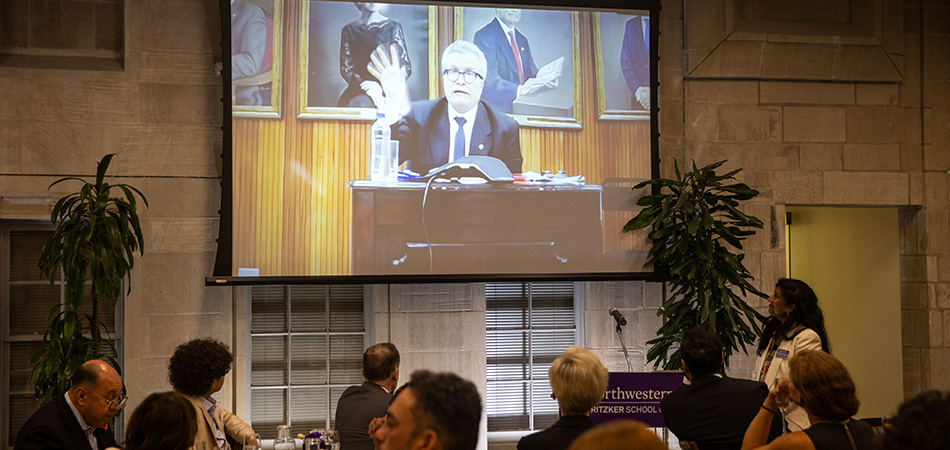
This spring, the Center for International Human Rights honored Judge Fernando Castro Cruz, magistrate judge in the Constitutional Chamber of Costa Rica and former President of the Supreme Court, with our annual Global Jurist award. The Center recognized his recent judicial opinion upholding the fundamental human rights and dignity of migrants, who he described as “those who walk to survive.”
In February 2025, the U.S. government sent approximately 200 migrants and asylum seekers to Costa Rica, via two military flights. Adults were placed in shackles, and the group included 81 children between the ages of one and seventeen. They were placed in detention upon arrival; they could not leave, access proper medical treatment, or freely communicate.
In June 2025, Costa Rica’s Constitutional Court heard a challenge to the group’s detention. Judge Castro Cruz wrote “I cannot remain silent, I cannot conceal a flagrant violation of the dignity of many human beings, who were treated as objects.” The court’s decision ensured the group’s release, and that future migrants transferred to Costa Rica will be treated with dignity and humanity, as the law requires. “His decisions in the face of considerable adversity represent the principled approach towards human rights we seek to recognize,” said CIHR director Priyanka Motaparthy.
This April, students, faculty, alumni, and members of Chicago’s Costa Rican community, gathered celebrate and honor the judge. UN Special Rapporteur on the Independence of Judges and Lawyers, Professor Margaret Satterthwaite, spoke to the risks judges face around the world. Judge Castro Cruz delivered a moving lecture to the law school earlier that day, sharing his eloquent vision of a judge’s responsibilities. However, he was forced to join the events virtually. His valid U.S. visa was revoked just weeks before, apparently on political grounds.
CIHR’s annual Global Jurist award and event series give our students and community a chance to learn from exemplary judges from around the world, shaping a shared understanding of the challenges and risks they face upholding human rights law.
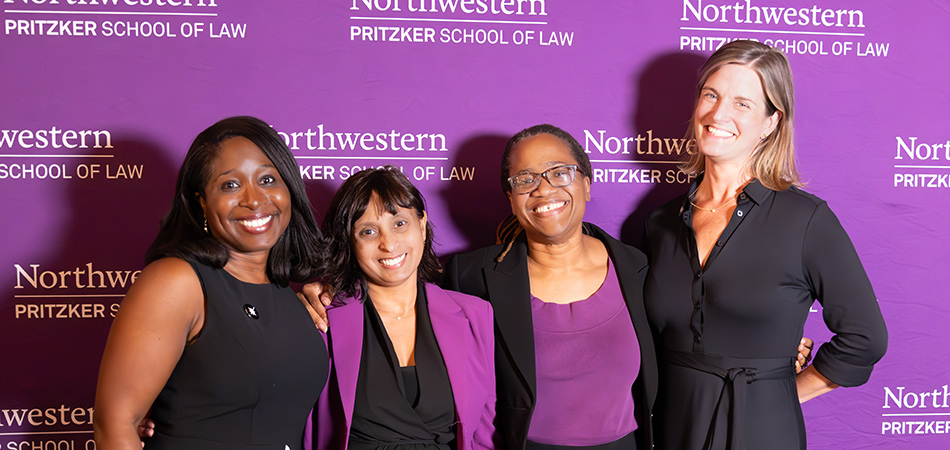
For some clients, the Center on Wrongful Convictions at the Bluhm Legal Clinic represents a final chance at freedom.
For more than 25 years, the Center, led by Clinical Professor of Law Andrea Lewis Hartung, has worked to challenge wrongful convictions and extreme sentences, while also shining a light on the systemic failures that make these injustices possible. Along the way, it prepares law students to advocate with both rigor and care for clients navigating some of the most difficult moments of their lives.
Students are at the heart of this work. This academic year, they have stood in court at evidentiary hearings, helped prepare a gubernatorial pardon request for a longtime client, drafted substantive pleadings and briefs, and conducted on-the-ground investigations to support their clients’ claims. Just as importantly, they are learning what it means to show up with empathy and patience in a legal system that often demands both.
The Center’s work also extends beyond any single case. It has re-launched a law firm pro bono initiative, partnering with firms on intake and case development, and continues to collaborate across the Clinic and with community partners. This includes hosting author and activist Emil DeWeaver with the Social Work Advocacy Program, co-counseling with a local organization on cases involving incarcerated women, and working with colleagues and a local psychologist to convene advocates focused on better supporting survivors of domestic violence involved in the criminal legal system.
At a time in our history when the concepts of truth and justice are facing constant challenge, the Center’s work to support individuals who often have faced oppression and unfairness from every aspect of our public systems is more important than ever.
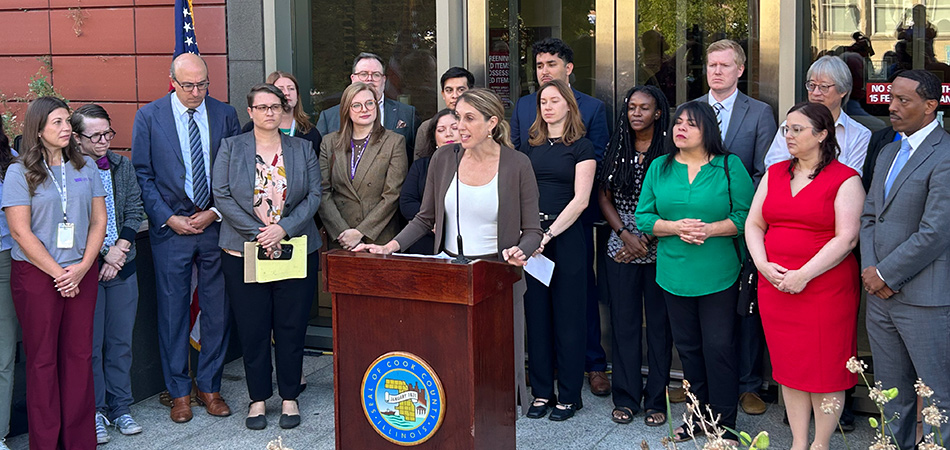
In fall 2025, at the height of “Operation Midway Blitz,” federal immigration enforcement efforts led to mass arrests and a rapidly deteriorating situation at the Broadview ICE facility just outside of Chicago. Reports from inside the facility described severe overcrowding, unsanitary conditions, and limited access to food, water, and legal counsel, raising urgent constitutional concerns.
In response, the MacArthur Justice Center (MJC), led by Clinic Director Alexa Van Brunt and Clinical Associate Professor Jonathan Manes, alongside co-counsel and with the support of Clinic students, filed a class action lawsuit—Moreno-Gonzalez v. Noem et al.—challenging the horrific conditions of confinement and denial of access to counsel.
Just days later, following an emergency hearing in which immigrant detainees at Broadview and their attorneys testified, a federal court issued a temporary restraining order (TRO), finding that conditions at Broadview were “unnecessarily cruel” and did not “pass constitutional muster.” The order required immediate changes to improve living conditions and ensure access to legal representation. The order remains in place, and MJC and co-counsel are monitoring DHS’ compliance.
While the case directly impacts those detained at Broadview, its significance extends well beyond a single facility. The litigation represents an important effort to hold DHS accountable for its immigration detention practices and to establish baseline protections for people in immigration custody—demonstrating how strategic, system-level advocacy can drive broader structural change.
Clinic students have played a central role in this work. They assisted in drafting the complaint, visited detainees, conducted interviews, obtained declarations and drafted motions, reviewed discovery, and helped prepare depositions. Students are now actively involved in ongoing negotiations with the government to secure a long-term resolution to protect the rights of individuals at Broadview for years to come.
Beyond the Broadview litigation, MJC has continued to challenge immigration enforcement practices through coordinated advocacy and litigation. In partnership with the Cook County Public Defender’s Office and representing a coalition of legal and community organizations, MJC successfully petitioned for a groundbreaking court order in Cook County barring warrantless ICE arrests in and around courthouses—helping to safeguard access to justice for immigrant communities, including for domestic violence survivors who were targeted by the ICE arrests.
MJC is also representing individuals impacted by a highly publicized, militarized raid on a residential building in Chicago’s South Shore neighborhood last September and is preparing additional litigation on behalf of the immigrants who were unlawfully detained and abused by federal agents. In another case, MJC represents Aliya Rahman, a disabled woman who was violently detained by federal agents during Operation Metro Surge in Minneapolis and denied medical care while in custody. Her case has drawn national attention—she testified before Congress about her ordeal and was a guest of Ilhan Omar at the State of the Union address—and underscores the human impact of these enforcement practices.
Through this work, MJC is not only advocating for individual clients, but also shaping the legal frameworks that govern how immigration enforcement operates, challenging the current Administration’s vast overreach and advancing protections that reach far beyond any single case.
What does it mean to learn the law and then see it play out at the highest level? In this video, students from the Carter G. Phillips Center for Supreme Court Advocacy share what it’s like to step inside the U.S. Supreme Court, connect their Clinic work to real cases, and experience firsthand the craft of appellate advocacy. It’s a glimpse into the kind of immersive, career-shaping learning that defines the clinic.
Faculty from leading law schools, including Northwestern Pritzker Law’s Associate Dean for Clinical Education and Director of the Bluhm Legal Clinic, Robin Walker Sterling, examine growing political interference in clinical programs. The article makes a clear case: protecting clinical education does not require special treatment, only adherence to longstanding academic freedom principles that safeguard teaching, client representation, and the role of universities in a democratic society. Read the paper on SSRN ›
As we reflect on the work of our clinicians, students, staff, and community partners, we are reminded that clinical legal education is not only an academic endeavor—it is an ongoing commitment to ...

Earlier today, Northwestern Pritzker Law Dean Hari Osofsky shared the following message with the Northwestern Pritzker Law community: Dear Members of the Northwestern Pritzker Law Community, I ...