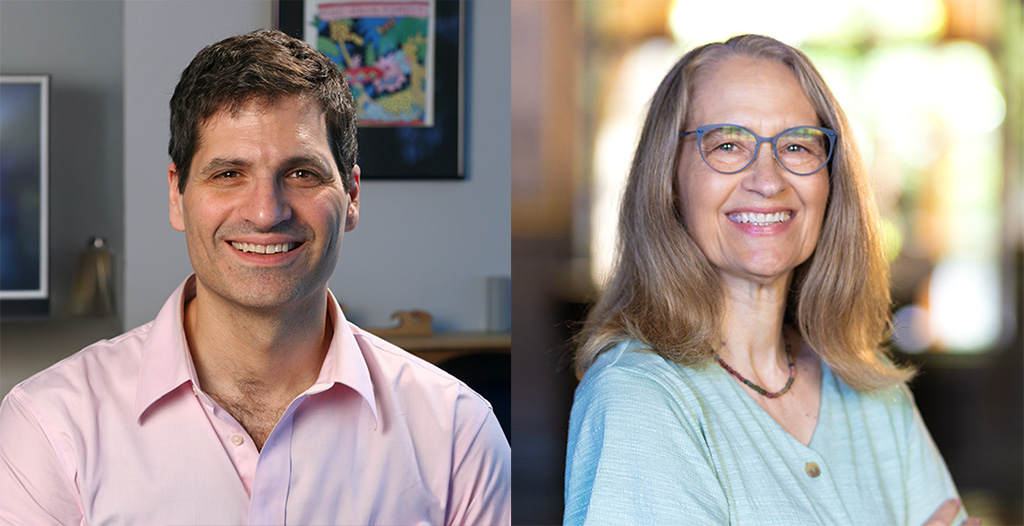
Civil procedure provides the backbone for how legal cases move forward, from when a case is first filed to the ultimate conclusion. It’s also a keystone of the research undertaken at Northwestern Pritzker School of Law, where faculty collectively constitute a renowned, generationally and intellectually diverse set of viewpoints.
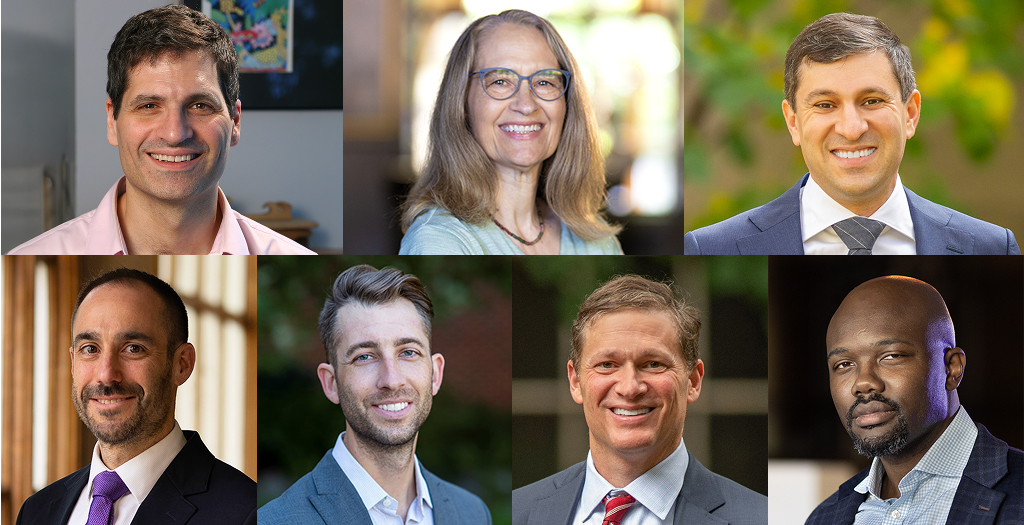
The roll call of civil procedure scholars includes Interim Dean Zachary Clopton, Daniel Hale Williams Professor of Law; Martin Redish, Louis and Harriet Ancel Professor of Law and Public Policy; James Pfander, Owen L. Coon Professor of Law; Myriam Gilles, Catharine Waugh McCulloch Professor of Law; and Monica Haymond, Assistant Professor of Law.
“I think we have the best civil procedure faculty in the country, full stop,” Clopton says. “Marty is a national treasure. Jim is an amazing scholar of federal jurisdiction, civil rights litigation, and the history of the courts. Myriam is a leading expert in complex litigation; she also does a lot of really interesting public policy work around mandatory arbitration. And Monica is a rising star in civil procedure. It’s amazing to be on a faculty with this group of people, to have lunch and talk about procedure.”
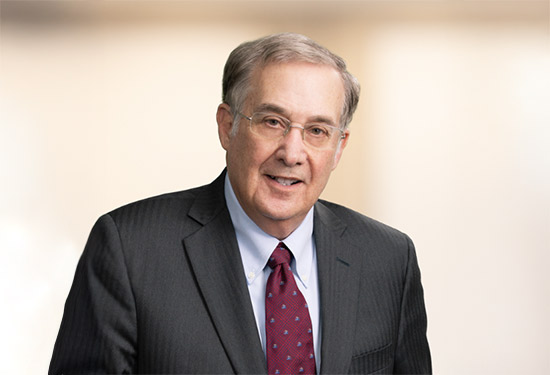
Redish, who teaches Civil Procedure I and II and Federal Jurisdiction, says he’s as much as constitutional law scholar as a procedure scholar, which is “a mixture that doesn’t happen often” and he believes should be more common. “That is a serious flaw in our system,” he says. “Much of procedure has enormous implications for constitutional law, but there are very few people who do both, so mostly those [implications] are left unattended by constitutional analysis.”
Cited in the First Amendment Encyclopedia as “one of the nation’s foremost authorities on constitutional law and the First Amendment,” Redish says much of his work in procedure seeks to bridge it with constitutional law “and find the constitutional problems that plague procedure.” For example, about half of his recent book Due Process in American Democracy (Oxford University Press, 2024) covers civil procedure, viewed through the lens of constitutional theory and constitutional doctrine.
Redish is currently working on a book, titled Federal Jurisdiction and Constitutional Democracy, about how the laws surrounding federal jurisdiction often have been shaped without looking at how they’re situated within the broader functions of constitutional democracy, which balances majoritarian decisions by representative bodies and counter-majoritarian constitutional limits.
“Both aspects of that have been ignored in the shaping of federal jurisdiction,” he says, adding that one chapter focuses on the 11th Amendment’s guarantee of state sovereign immunity in federal court, “and how it has been interpreted in a completely incoherent way, ignoring the guarantees of the Constitution by enabling states to escape liability.”
As part of Northwestern’s famed Senior Research Program, Redish is also writing an article with one of his students about the constitutional implications of what he terms “procedural collectivism,” which applies primarily in multi-district litigation and class-action lawsuits. “Where the system tries to adjudicate—collectively—numerous, often countless individual instances of potential liability, it groups them tighter, in ways that are sometimes problematic. It’s often a square peg in a round hole,” he says. This project, it turns out, was inspired by a friendly disagreement with recently arrived Northwestern colleague Myriam Gilles. “I’ve admired her work. I pushed very hard for us to hire her, and I’m excited she’s here,” Redish says.
“Where the system tries to adjudicate—collectively—numerous, often countless individual instances of potential liability, it groups them tighter, in ways that are sometimes problematic. It’s often a square peg in a round hole.”
– MARTIN REDISH
With another student, Redish has coauthored an article, to be published in the North Carolina Law Review, about the doctrine of federal jurisdiction and its historical origins. The article will establish “that the doctrine known as ‘our federalism’—federal court deference to ongoing state judicial criminal proceedings—rests on a historical house of cards, when you compare the work of modern historians to the kind of analysis the Supreme Court used in setting up this doctrine,” he says. “They completely misused history. It’s an interdisciplinary piece that leans heavily into the work of historians about the post–Civil War period.”
Finally, Redish has been invited to give an endowed lecture at UCLA in March on the topic of free expression, which in a sense will bring him full circle to his origins. “I started my career writing about free speech and the First Amendment, and in many ways, I am best known for that,” he says.
Pfander teaches Civil Procedure to 1L students at Northwestern, and three classes to upper-division students: Federal Jurisdiction; Conflicts of Law; and Remedies, the latter of which dovetails with his research interests in jurisdictional law and accountable government. He also oversees independent study projects and frequently collaborates with 3Ls on senior research projects.
“The senior research program allows me to partner with a dedicated student to explore in detail questions of law, policy, and history that have come up in my own work,” he says. “It’s a fruitful and productive way to extend the faculty’s research capacity and to work more closely with our students than would be possible in the context of a large lecture class.”
Pfander’s scholarship centers on government accountability and the important role federal courts play in ensuring that governments stay within the bounds of the law. “It’s a busy time for me right now,” he says. In the past six months, Pfander has joined in filing amicus briefs in such notable Supreme Court cases as Trump v. CASA (regarding universal injunctions); Enbridge LLP v. Nessel (equitable tolling of removal deadlines); and Trump v. Cook (remedies for wrongly removed federal officers).
In addition, Pfander has been consulting with state legislatures as they consider laws to safeguard individual rights from unconstitutional forms of civil immigration enforcement. His paper on federal officer suits under the Federal Tort Claims Act recently appeared in the Harvard Law Review.
“The senior research program allows me to partner with a dedicated student to explore in detail questions of law, policy, and history that have come up in my own work. It’s a fruitful and productive way to extend the faculty’s research capacity and to work more closely with our students than would be possible in the context of a large lecture class.”
– JAMES PFANDER
On another front, Pfander was tapped to serve as a reporter to the American Law Institute’s Restatement of the Law of Constitutional Torts, a project directly related to his research interests in the use of the Bivens action to secure federal official compliance with law. In October, the ALI’s Council approved an early draft of the project, but this work will continue for several more months.
Pfander’s books include: One Supreme Court, which shows that Congress cannot deprive the Court of its power to superintend the work of inferior tribunals; Constitutional Torts and the War on Terror, which reckoned with the difficulty individuals faced in securing redress for forms of torture and extraordinary rendition inflicted by U.S. officials in the aftermath of 9/11; and Cases Without Controversies, a demonstration that the language and history of Article III empower Congress to assign a much broader array of proceedings to the federal courts than current doctrine allows.
Pfander also conducts comparative assessments of constitutional courts in the United States and those of other legal systems, such as the European Court of Human Rights and European Court of Justice. He has taught or lectured in such countries as Scotland, England, Portugal, Romania, Israel, New Zealand, and the Czech Republic on a wide array of comparative topics including sovereign immunity and the rule of law.
In the spring, Pfander will teach and lecture on comparative courts at the Instituto Tecnológico Autónomo de México (ITAM), and he will convene a seminar at the Scottish Court of Session on the influence of the Scottish model of judicial hierarchy on the structure of the Article III judiciary in the United States.
Pfander’s work overlaps with that of Redish on questions related to federal jurisdiction, with that of Clopton and Haymond on the vexed problem of universal injunctions, and with Gilles and Clopton in the area of complex litigation. “It’s a pleasure to be in conversation with so able a group of colleagues. All of us routinely share drafts of our work with one another as we refine our ideas,” he says.
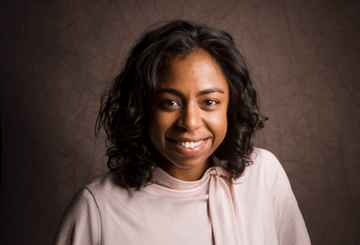
Gilles, who joined the Northwestern Pritzker School of Law faculty in July after 26 years at the Benjamin N. Cardozo School of Law at Yeshiva University, teaches and writes about civil procedures, complex litigation, and torts. She has taught 1L classes in Civil Procedure and Torts, and she will teach Product Liability in the spring semester.
While procedure is the spine of the civil legal system, torts is “one of the meatier parts of the law that hang off that spine—contracts, property, and other issues,” Gilles says. “I try to help students see the connection between the rules and the substance they are trying to regulate. Torts and Procedure [courses] are a nice way to do that in the 1L year.”
When it comes to scholarship and writing, Gilles is best known for her work related to mandatory arbitration, which governs provisions that bind almost every transaction, and which typically say that a case cannot be brought to court or be brought as part of a class or collective. The U.S. Supreme Court approved such provisions about a decade ago, “which inures greatly to the benefit of big companies,” she says. “It’s basically a form of legal immunity if they can force every claim into a private, one-on-one setting.”
Gilles testified before Congress to help get a statute enacted in 2022 that prevents employers from doing so in cases of sexual harassment or sexual assault. “The theory—that somehow we were able to get senators to see—is that this is endemic in American workplaces, and it only becomes a bigger problem if they’re muzzled and forced into some silent setting,” she says.
She hopes to help push through a bill that would apply to all mandatory arbitration. “A lot of my work has been advocacy,” Gilles says. “But I write about these provisions as well. I serve as an expert in some of these cases because there is so much law, and many judges remain pretty ignorant about what the provisions are, and whether they’re enforceable, and what obligations the judge has.”
“Where can we work with the private bar and private citizens to maximize the deterrent value? We don’t want to keep bringing lawsuits. We want companies, and employers, to be fearful of lawsuits so they don’t violate the law.”
– MYRIAM GILLES
Gilles also has written about class actions under Federal Rule 23(c), which allows judges to certify not only classes of people, but particular issues common to the class as well. “I argued, in a series of three or four articles, that this is a procedure that might be able to alleviate some of the more negative consequences of the Supreme Court’s class action jurisprudence, cases in which the court has made class actions harder to bring,” she says.
Gilles has also written about qui tam, meaning “in the name of the king,” which allows private citizens to stand in the shoes of the government, whether federal or state, and bring a claim in the name of that government, which happens federally under the False Claims Act. “This is an aspect of my writing that focuses on the importance of private enforcement, even when there are tons of headwinds that might prevent it,” she says. She describes the mechanism as: “See something, say something. Tell us, but not only that, we’re going to give you a bounty, by giving you a cut of whatever you’re able to recover.”
States have analogous statutes, and one of the more effective has been legislation in California that allows workers who believe their rights have been infringed upon to bring a claim on behalf of the state’s labor division for issues like wage theft and workplace safety violations, Gilles says. “Where can we work with the private bar and private citizens to maximize the deterrent value?” she says. “We don’t want to keep bringing lawsuits. We want companies, and employers, to be fearful of lawsuits so they don’t violate the law.”
Clopton, a nationally recognized scholar of civil procedure, complex litigation, and international litigation, has served for the past two years on the national Advisory Committee on Civil Rules after receiving an appointment from U.S. Supreme Court Chief Justice John Roberts.
Clopton usually teaches Civil Procedure to first-year students, as well as International Litigation. In his early career, his scholarly research focused on the international side of law, drawing from his interest in how issues were resolved when legal systems conflicted. “What do we do about a transaction between a company in the United States and a company in China over a business that’s going to operate in Brazil?” he says. “You have three different legal systems that answer questions in three different ways, and how do we figure that out?”
Some of Clopton’s earlier work focused on how U.S. courts would handle those types of situations, and he quickly realized that questions about conflicting legal systems also applied to cases involving more than one state, or the federal system versus a state, or even civil versus criminal law. “I moved into thinking more broadly about the ways that we organize the legal system, and then the ways, when we have different jurisdictions or different structures, that they need to interact with one another,” he says.
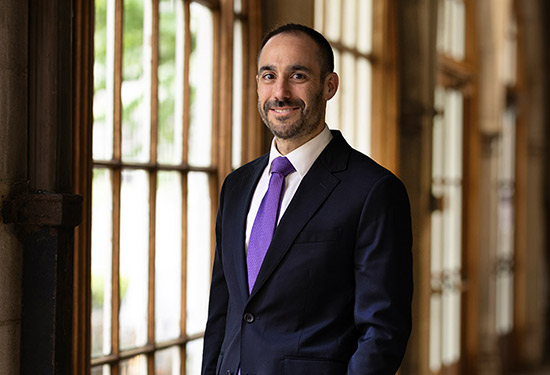
Professor Zachary Clopton in Levy Mayer Hall at Northwestern Pritzker Hall
“I want to think about how things like court structure, jurisdictional rules, and rules of procedure affect the way that these institutions do the work that they do. It’s maybe more of a social science perspective on the courts than a purely doctrinal, legal one.”
– ZACHARY CLOPTON
While most civil procedure scholars write about federal courts, state courts handle more than 100 times as many cases, and there are 50 of them—so Clopton, over time, has concentrated some of his efforts there. “They’re all different, and often their records are harder to access,” he says. “I wrote a series of papers answering what I thought were some fundamental questions about how state courts are structured. … No one had really written the 50-state paper about how state courts make their rules of procedure.”
Even more granularly, Clopton’s research also has examined court- and even judge-specific rules, such as local rules, standing orders, or individual judge practices, “just trying to have a deeper understanding of what those rules are, and how they get made,” he says. “Who participates in the making of the local rules in the Northern District of Illinois?” Clopton’s papers in this area, coauthored with Professor Marin K. Levy at Duke Law School, will be published in the Virginia Law Review and Duke Law Journal.
Sub-local rules came into play in recent habeas corpus litigation, when the Trump administration sought to challenge a federal court’s policies related to deportation “through the unusual mechanism of suing, by name, all of the federal judges in Maryland,” Clopton says. “Part of the reason that they chose that approach is that it’s unclear how you go about challenging these sub-local rules because they’re not adopted through the normal rulemaking system. … So, these seemingly technical, procedural questions have big impacts on the kinds of cases we’re reading about in the newspaper every day.”
What binds the various strands of Clopton’s research is an abiding interest in the courts and civil litigation as institutions of public policy. “I want to think about how things like court structure, jurisdictional rules, and rules of procedure affect the way that these institutions do the work that they do,” he says. “It’s maybe more of a social science perspective on the courts than a purely doctrinal, legal one.”
Clopton considers it “an enormous honor” to serve on the Advisory Committee on Civil Rules, which makes and amends the Federal Rules of Civil Procedure, “the thing I’ve spent my career teaching and studying,” he says. Lately, the committee has been discussing third-party litigation financing and how to resolve the legal, financial, and ethical questions of such arrangements. “Should they be disclosed to the court? Should they be disclosed to the other parties? To the general public?” he says.
Clopton’s work has been cited both in academic papers and judicial rulings, and he’s grateful that judges and other court officials have reached out to talk to him about what he’s learned. “On this new local-rules project, a number of judges have said, ‘We’d like to do things better in our district. Can you talk to us about what you’ve learned?’” he says. “Not because they’re going to do exactly what I say, but because I now have built a sense of what the options are. I’ve learned in these projects that the courts are often really eager for information, but it’s not readily accessible. And one of the things academics can do is, they can collect, organize, and present this kind of information that many people want and don’t have.”
Third-Party Interveners and Incoming Administrations
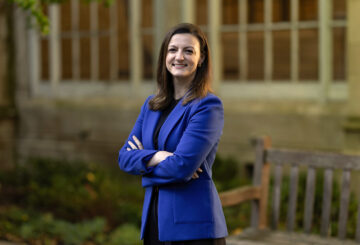
Monica Haymond
Haymond teaches Federal Jurisdiction, an upper-division civil procedure course about the powers of the federal court system and the doctrines particular to it, including how cases can be heard there and what procedural missteps prevent cases from being heard. It’s a “course that’s essential to anyone interested in litigation, generally, but especially if they plan to litigate in federal court, or clerk for a federal judge—or even if they just want to understand the news,” she says.
In addition, Haymond teaches a seminar course every year, called Procedural Issues in Public Law Litigation, which raises “a collection of different doctrines that come up in federal litigation, in cases particular to the federal government and public law generally,” she says. For example, “We discuss how you proceed in a class action, and when courts put limits on the ability to sue the federal government as a class. … It’s about blackletter law, but also what public policy issues are affected by those doctrines,” she adds.
Haymond has tackled three main research projects during her academic career, which followed seven and a half years of practice in appellate litigation and began with a two-year stint as a Climenko Fellow at Harvard Law School before she arrived at Northwestern in July 2024. Her first published paper looked at how the rules of civil procedure potentially allow third-party outsiders to change the substantive outcome of a case, which can happen in surprising ways in significant cases, like suits seeking nationwide injunctions to stop the enforcement of federal policies.
“Courts have an incredible amount of discretion under the rules of civil procedure about whether to allow an outsider in,” she says. “When a court says an intervener can or can’t come in, they are also necessarily making a decision about how the rest of the case is going to proceed. … The arguments and evidence in a case are usually all shaped by how the case proceeds in the district court, which then limits how the advocates can tee up the questions in the case for the Supreme Court.”
“Courts have an incredible amount of discretion under the rules of civil procedure about whether to allow an outsider in. When a court says an intervener can or can’t come in, they are also necessarily making a decision about how the rest of the case is going to proceed.”
– MONICA HAYMOND
Haymond’s second paper, which she plans to publish next year, looks at how newly elected presidents use court judgments to change substantive rules in a way that furthers their own public policy goals. Given that incoming presidents inherit pending cases against the previous administration, some of which might have ended in a nationwide injunction or universal vacatur, the new administration can decide to dismiss or not file a pending appeal. Doing so erases a rule the president otherwise would have needed to go through an onerous notice and comment process to appeal, she says.
The Supreme Court has suggested that the maneuver to circumvent this may be unlawful under the Administrative Procedure Act, Haymond says, and some justices have suggested it might be a reason to hold that courts don’t have the power to universally vacate rules. But her research concludes that the workaround is lawful, however much it might seem “normatively undesirable,” and she believes that using this practice to justify circumscribing the power of courts to vacate federal rules would be “throwing the baby out with the bathwater.”
Haymond is also working on project that analyzes how the rules of civil procedure enable courts to grant remedies that are sometimes broader than what parties initially had in mind, and how those procedural rules influence other constitutional doctrines that affect how public law cases are litigated. This procedural rule was written with private parties in mind, she says, and courts have been left to figure out how it applies in public law litigation largely without public input. “At a time when the scope of judicial remedies is hotly debated, it’s important to examine how the rules facilitate courts using their discretion to expand the relief parties can get at the end of a case.”
Haymond’s first paper, published in the Chicago Law Review, received plaudits from the highly acclaimed Judge Stephanos Bibas of the U.S. Court of Appeals for the Third Circuit, who will give a distinguished lecture this spring as the Law School’s Howard J. Trienens Visiting Judicial Scholar. Judge Bibas called Haymond’s paper “a landmark.”
The work of Northwestern Pritzker Law’s scholars in the area of civil procedure has received many such reactions over the years, a trend that seems likely to continue well into the future.
With the 2026 midterm elections just weeks away, some of the rules governing those elections are still being contested in courtrooms across the country even though voters are already receiving ...
The animal rights movement brings moral clarity and emotional resonance to the debate over how and to what extent animals deserve legal protection in a variety of contexts, from the conditions of ...
Northwestern Pritzker School of Law is home to an incredible group of faculty members working at the intersections of law and many other disciplines. Their research and scholarship has helped ...